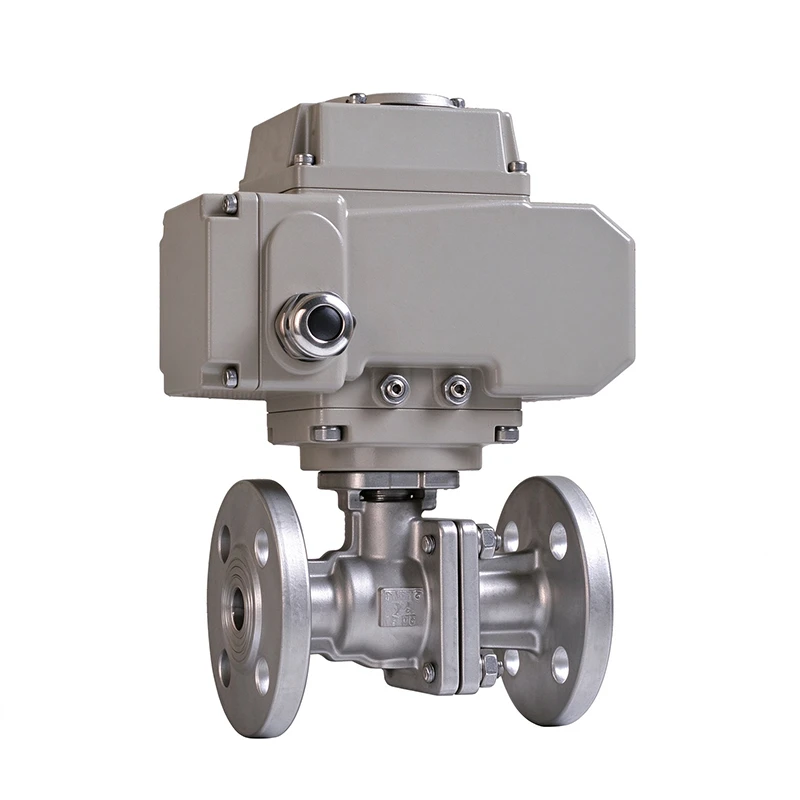
Based on their structural design, ball valves can be categorized as follows:
Floating Ball Valves: In this design, the ball is "floating"-meaning that under the pressure of the medium, it can shift slightly and press firmly against the sealing surface at the outlet end, ensuring a tight seal. While these valves feature a simple structure and provide good sealing, the entire load exerted by the medium is transferred to the outlet-side sealing ring. Therefore, it is essential to ensure that the material of the sealing ring can withstand the operational load transmitted through the ball. This type of structure is widely used for low- to medium-pressure applications.
Trunnion-Mounted (Fixed) Ball Valves: In this design, the ball is fixed in place and does not shift under pressure. These valves are equipped with floating seats; when subjected to medium pressure, the seats shift to press the sealing rings firmly against the ball, ensuring a secure seal. Typically, bearings are installed on the upper and lower shafts (trunnions) of the ball, which reduces the operating torque; consequently, this design is well-suited for high-pressure and large-diameter valves. To further reduce operating torque and enhance sealing reliability, "lubricated-seat" (or oil-sealed) ball valves have been developed. In these, a specialized lubricant is injected between the sealing surfaces to form an oil film, which improves sealing performance while simultaneously lowering the operating torque-making them particularly ideal for high-pressure, large-diameter applications.
Elastic Ball Valves: In this design, the ball itself is elastic. Both the ball and the seat sealing rings are constructed from metal. Because the required sealing contact pressure is extremely high-exceeding what can be achieved by the pressure of the medium alone-an external force must be applied. These valves are designed for use in high-temperature and high-pressure environments.
The elasticity of the ball is achieved by incorporating an elastic slot at the lower end of its inner wall. When the valve is closed, a wedge-shaped head on the valve stem expands the ball, forcing it against the seat to create a seal. Before the ball is rotated to open the valve, the wedge-shaped head is disengaged, allowing the ball to return to its original shape. This creates a small gap between the ball and the seat, which reduces friction on the sealing surfaces and lowers the operating torque.